
Hippocrates, notorious for being recognized as the Father of Medicine, once stated that “walking is man’s best medicine,” and numerous studies support his belief that walking offers substantial health benefits. The reason that exercise benefits our brains is because it can freshen and renovate the white matter, which in turn improves our ability to think and recall important information. In fact, the latest research shows that our brains are malleable and that exercise, such as walking, can bring about powerful and positive changes. This is a significant discovery as we haven’t always been aware that the brain can adapt to changes in the environment.
Why Walk?
Those with neurological conditions, such as ADHD or dementia, are especially likely to benefit from walking. For example, walking has been shown to help minimize symptoms of ADHD. In addition, many research studies have discovered that walking can help to prevent cognitive decline and lower the risk of dementia. As we age, our brains naturally encounter more challenges with memory. However, walking has been proven time and time again to help with forgetfulness. For example, one study showed that after six months of a walking routine, participants had noticeable improvements in their memory.
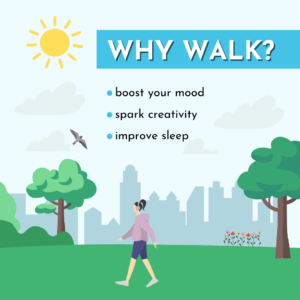
Whether you have an existing neurological condition or not, walking can offer many benefits. For all people, it is well known that walking can help to boost your mood and spark creativity. Next time you feel down or need to get out of a creative slump, a quick walk around the neighborhood may be just what you need. Moreover, if you experience sleep disorders, you may also notice that you get better sleep after incorporating walking into your routine.
How to Begin a Walking Exercise Program
If you are interested in starting a walking exercise regime, always speak to your provider first to ensure it is safe for you. Once you know you are safe to begin this type of exercise, then you can start considering a plan based on your unique goals. Walking for thirty to forty minutes four to five days a week is plenty to experience brain-boosting benefits, and many individuals aim to walk for this length of time. However, you may find that more or less time spent walking works best for you. Again, you will want to first consult with your doctor or a trusted medical professional before beginning any new exercise program.
In conclusion, walking is one of the simplest forms of exercise and offers many health advantages. Numerous studies suggest that walking is an excellent way to improve your overall brain health.
If you enjoy reading brain health blogs like this one, be sure to subscribe to our TIND e-newsletters, where we share insights from our doctors and keep you up-to-date with the latest neurological news. Also, if there are any health, brain-related, or neurological topics you would like us to write about in our blog, you can let us know by contacting us here. We are always open to suggestions and would love to hear from you!